Carney’s Asylum Orders Need a Backlog Ledger
Cabinet can streamline asylum paperwork. It cannot ask Canadians to accept a 298,200-case backlog on trust.
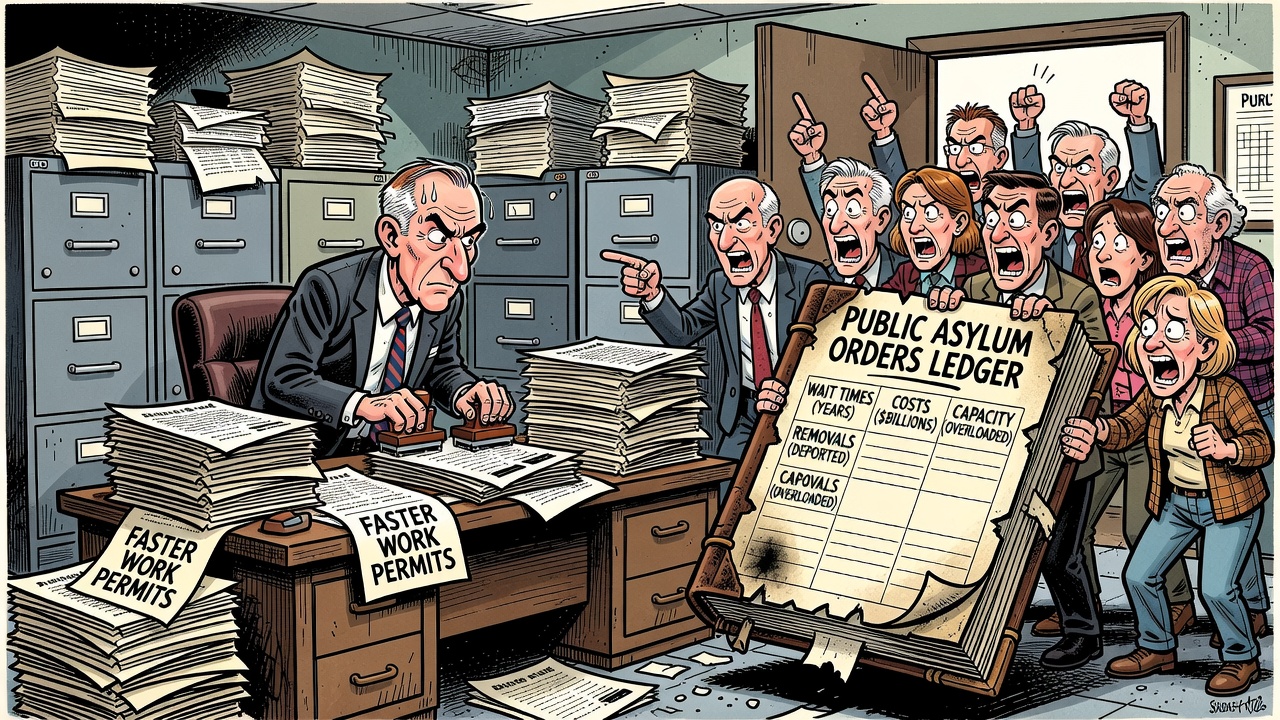
Ottawa’s asylum system is no longer a small administrative problem. The government’s own Canada Gazette notice said the Refugee Protection Division received 99,500 new asylum claims in the 12 months ending March 2026, leaving an inventory of 298,200 cases and average wait times of 25 months. The Immigration and Refugee Board’s 2026–27 planning documents separately warned that intake near 100,000 claims would leave accumulated inventory around 300,000 cases at the end of March 2026.
That is the context for the Carney government’s asylum-rule rewrite. IRCC said in June that Bill C-12 had received royal assent on March 26, 2026, and that proposed regulations would “modernize” asylum processing, including earlier work-permit access for eligible claimants. The Gazette proposal described a single online application, a bigger ministerial role before referral to the IRB, and new pre-referral abandonment mechanisms. Rebel News now reports cabinet quietly approved four related immigration and asylum orders on October 23, without a ministerial announcement.
The accountability issue is not whether Canada should process legitimate refugee claims. Conservatives should be clear about that. A country with borders and laws can still meet its humanitarian duties. The issue is whether Ottawa is changing the operating rules around a nearly 300,000-case backlog while refusing to publish a plain-language ledger of what will happen next.
Faster work permits may reduce welfare pressure if claimants can support themselves while waiting. A single online application may reduce duplication. Earlier triage may help weak or abandoned claims move out of the system faster. But every one of those claims depends on capacity, enforcement and measurement. If the backlog keeps growing, “modernization” becomes a slogan. If failed claims are not removed in a timely way, the system loses credibility. If provinces and cities absorb housing, shelter, health-care and legal-aid costs without a federal dashboard, the bill is simply being hidden in other budgets.
Carney should publish an asylum orders ledger before declaring victory: the order dates, final regulatory text, implementation deadlines, monthly claim intake, monthly finalized claims, inventory by stage, average and median wait times, work permits issued, abandonment findings, failed-claim removal outcomes, federal costs, provincial reimbursements, staffing levels and digital-system performance. Canadians should also see what assumptions Ottawa used when it promised timelier decisions.
This is not an anti-refugee demand. It is a pro-competence demand. Genuine refugees deserve fast decisions. Taxpayers deserve cost and capacity receipts. Communities deserve advance warning when federal intake decisions create local service pressure. And people with no valid claim should not be left in limbo for years because Ottawa prefers announcements to management.
A serious government does not hide a backlog inside regulatory language. It shows the numbers, owns the tradeoffs and reports progress every month until the inventory is under control.
- Rebel News: Cabinet quietly signs off on Carney’s asylum rules
- Immigration, Refugees and Citizenship Canada: Canada proposes new regulations to modernize the asylum process
- Canada Gazette, Part I: Proposed asylum process regulations
- Immigration and Refugee Board of Canada: 2026–27 Departmental Plan
- IRCC Senate committee material: Asylum briefing material
This article argues for public performance reporting and enforcement transparency. It does not oppose lawful refugee protection or allege misconduct by individual officials.