The EU Just Gave Carney’s “Associate Member” Pitch a Reality Check
If even EU member states are backing away from the undefined label, Canadians need the mandate, costs and vote process before any framework is signed.
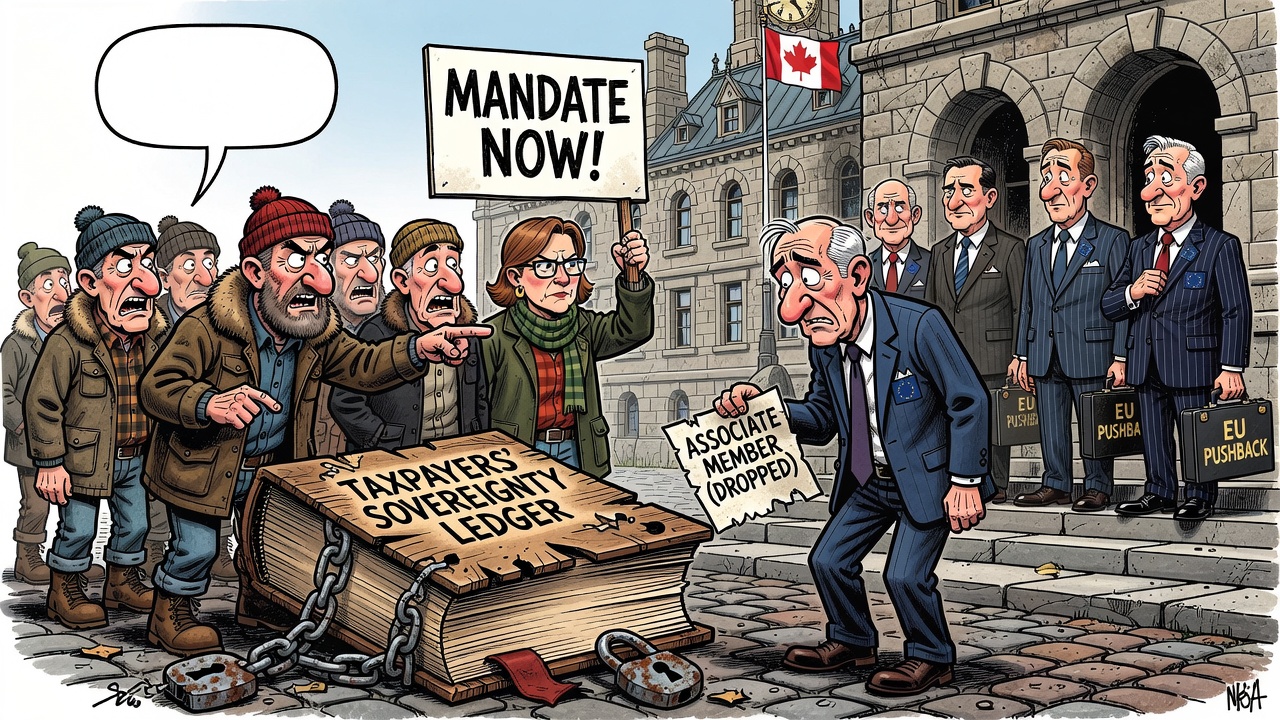
Prime Minister Mark Carney is hosting European Union leaders in Montréal on October 29 and 30 with a serious goal: deepening Canada’s trade, defence, technology, energy and critical-minerals ties with Europe. That part is easy to understand. Canada should diversify relationships when the United States is unstable. But serious strategy still needs democratic guardrails.
The problem is the label Ottawa and Brussels have been floating around the summit. European Commission President Ursula von der Leyen has described the proposed relationship as an “association without accession” and even as a form of associate membership. Yet on the eve of the summit, European reporting said the EU had removed “associate membership” from the draft declaration after member-state resistance, replacing it with softer language about an “ever closer association” short of full membership.
That is not just a branding quarrel. If EU member states themselves are uncomfortable with the undefined term, Canadians should be even more cautious about letting the Prime Minister market it at home as a grand new status before Parliament sees the fine print. EU treaties do not contain a ready-made Canada-style “associate member” category. The latest reports point to a process of defining the concept by the 2027 Canada-EU summit, not a finished agreement Canadians can evaluate today.
Conservatives should not oppose closer Canada-Europe cooperation for sport. More market access, energy partnerships, critical-minerals investment and defence-industrial collaboration could all serve Canadian interests if negotiated openly and anchored in Canadian sovereignty. The accountability question is different: what, exactly, is Carney offering in exchange?
The public needs to know whether the framework would pull Canada into consultations on EU political or regulatory initiatives, whether Canadian firms would face “Made in Europe” limits in defence spending, what regulatory-alignment lists are being discussed, whether provinces were consulted on affected sectors, and whether any spending commitments or institutional roles are being created without a vote.
The official PM release says the summit is about turning complementary strengths into concrete benefits. Good. Then publish the concrete documents. Canadians should not have to decode summit poetry, leaked drafts and diplomatic walk-backs to understand the direction of national policy.
This is the receipt test: before any final Canada-EU framework is signed, Ottawa should release the negotiating mandate, legal opinion, draft declaration, regulatory-alignment table, provincial consultation record, cost estimate, defence-procurement access terms, and the exact parliamentary process for approval. If the deal is harmless cooperation, transparency will help it. If the title had to be softened because Europe could not define it, Canadians deserve to know that before Carney turns the photo-op into a mandate.
- Prime Minister of Canada: Prime Minister Carney to host Canada-European Union Summit in Montréal
- Euronews: EU removes mention of “associate membership” from Canada declaration
- Associated Press: Carney hosts EU leaders as Trump pushes Canada toward Europe
- Consilium: EU-Canada summit
- Euronews: Is von der Leyen’s “associate membership” for Canada already dead?
This article is a follow-up to earlier Canada-EU coverage and focuses on the October 28–29 draft-language retreat and the need for public parliamentary receipts.