Build Canada Homes’ 900-Proposal Pipeline Needs a Public Risk Ledger
A housing agency can help build homes. It can also hide risk. With 900 proposals in the pipeline, Canadians deserve the receipts.
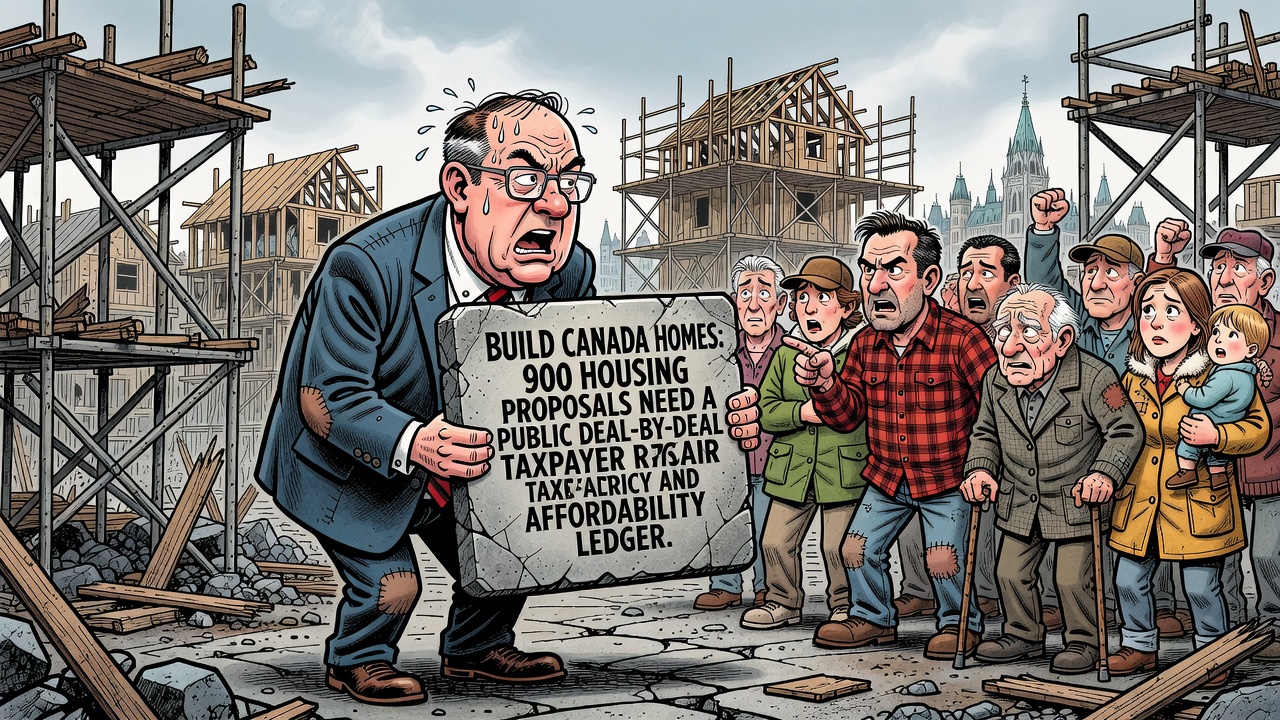
Build Canada Homes was sold as a hard turn from slogans to shovels. If it works, Canadians get more homes, more non-market supply and faster construction. If it fails, taxpayers may simply absorb private-market risk while politicians call it affordability.
That risk is no longer theoretical. Bloomberg, republished by Yahoo Finance, reported October 21 that Build Canada Homes CEO Ana Bailão says the agency will keep building through the downturn, even as home prices are described as down 20% and thousands of newly built condos sit unsold. The same report says the agency has drawn more than 900 proposals from builders and other proponents over the last year and has financed private-sector-led projects that otherwise would not have received funding, including a 600-unit rental development in Vancouver.
There is a case for government action. Canada has a housing shortage, young Canadians are priced out, and purpose-built rentals are not appearing fast enough. But the conservative accountability test is simple: public money requires public terms. When Ottawa derisks projects that private lenders would not fund, taxpayers deserve to know exactly what risk they inherited and what affordability they bought.
The Prime Minister’s launch announcement said Build Canada Homes was capitalized with an initial $13 billion. It promised flexible financial incentives, public land, large portfolio approvals and help getting projects off the ground. Build Canada Homes’ own project page lists partnerships across British Columbia, Manitoba, New Brunswick, the North, Ottawa, Quebec, Toronto and Yukon, mixing federal, provincial, municipal, non-profit, Indigenous and private-sector partners. That is a lot of moving parts. It is also a lot of room for soft terms, political favouritism and quiet bailouts unless every deal is traceable.
The clearest warning sign is the condo-conversion file. Ottawa and British Columbia announced a plan to use Build Canada Homes and BC Housing financing tools to convert more than 2,200 vacant condo units in priority growth areas into affordable homes. Maybe that is efficient. Maybe it is a rescue package for projects the market rejected. Canadians cannot tell from a press release.
So publish the ledger. For every proposal and approved project, disclose the proponent, beneficial owners, lobbyist contacts, public land involved, financing instrument, taxpayer exposure, private equity at risk, affordability definition, rent levels, resale or exit restrictions, expected completion date and clawback terms. If a project “would not have received funding otherwise,” explain why Ottawa is smarter than the market — and who pays if Ottawa is wrong.
Housing policy should be pro-homeowner, pro-renter and pro-taxpayer. Build the homes. But do not ask Canadians to trust a black box with billions of dollars and hundreds of private proposals.
- Bloomberg via Yahoo Finance: Carney’s Housing Agency Vows to Build as Canada Prices Plunge
- Prime Minister of Canada: Prime Minister Carney launches Build Canada Homes to supercharge homebuilding across the country
- Build Canada Homes: Partnerships and Projects
- Prime Minister of Canada: Canada and British Columbia forge new partnership to accelerate homebuilding
This article supports faster homebuilding and affordable housing. It argues that flexible public financing requires deal-level transparency before taxpayers absorb private development risk.