CBSA’s Removal Backlog Needs a Real Control Ledger
CBSA’s own numbers show the gap between Ottawa’s “control” language and the monthly enforcement receipts Canadians can actually measure.
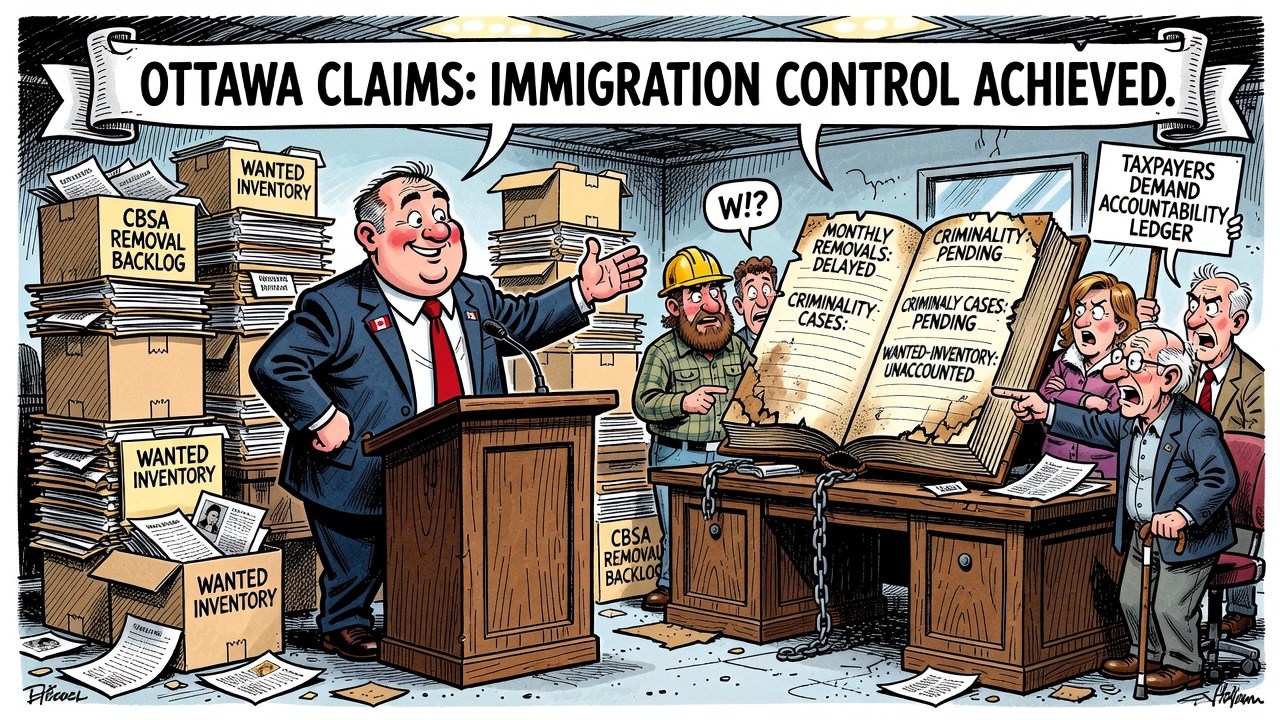
Ottawa keeps telling Canadians that immigration enforcement is under control. The Canada Border Services Agency’s own removals report says the public deserves a more serious answer.
In its May 2026 monthly removals report to Parliament, CBSA says it has a statutory obligation to remove people subject to an enforceable removal order as soon as possible. It also explains that due process and practical impediments can delay removal. Both points matter. Canada needs lawful process. But lawful process is not an excuse for hiding the size, speed and failure points of the system from taxpayers.
The May numbers are a management warning light. As of June 1, CBSA reported 1,933 removals enforced during May. At the same time, 98,592 people were in the broader enforcement continuum, including removal in progress, removal not possible and wanted inventories. The wanted inventory alone stood at 33,588 people because the agency was unable to locate them.
That does not mean every person in the inventory is a public-safety threat. It does mean Ottawa cannot keep selling “control” as a slogan while the federal agency responsible for removals is trying to track tens of thousands of people it cannot locate. Conservatives, liberals and everyone in between should be able to agree on this: if the government has issued an enforceable order, Parliament deserves to know whether the order is actually being enforced.
The delay categories make the case for a public dashboard. CBSA listed 6,860 travel-document challenges, 5,420 pending pre-removal risk assessments, 5,343 Federal Court ordered stays, 11,257 administrative deferrals of removal, 968 outstanding criminal charges and 550 people serving a sentence. Those are not talking points. They are bottlenecks, and bottlenecks require management.
May also included 87 removals involving criminality and 9 removals involving security, human or international-rights violations, or organized-crime inadmissibility categories. That is exactly why the issue should be handled with facts rather than fog. Canadians should not have to choose between due process and public safety. A competent government protects both.
The accountability standard is simple: publish the removals control ledger every month in plain language. Show enforceable removal orders, completed removals, wanted inventory, criminality and security categories, travel-document delays, court stays, risk-assessment delays, administrative deferrals, detention capacity, alternatives-to-detention participation and average time from order to removal.
Ottawa should also disclose what it is doing to reduce avoidable delays: which countries are not issuing travel documents, how many files are stalled by federal paperwork, how many cases collapse because of poor documentation, how many officers are assigned to removals, and what performance targets the minister has approved.
This is not about blaming immigrants. It is about measuring whether the federal government can run the system it built. If ministers want credit for being in control, they should publish the control receipts.
- Canada Border Services Agency: Monthly removals report to Parliament — May 2026
- Canada Border Services Agency: SECU Supplementary Estimates fact sheets — March 24, 2026
- Windsor Police Service: Public safety update — August 15, 2026
This article criticizes federal system management and enforcement capacity. It does not allege unlawful conduct by any person in the immigration system unless specifically established by the linked official record.