The $7.5B Tariff Rescue Needs Clawbacks, Not Blank Cheques
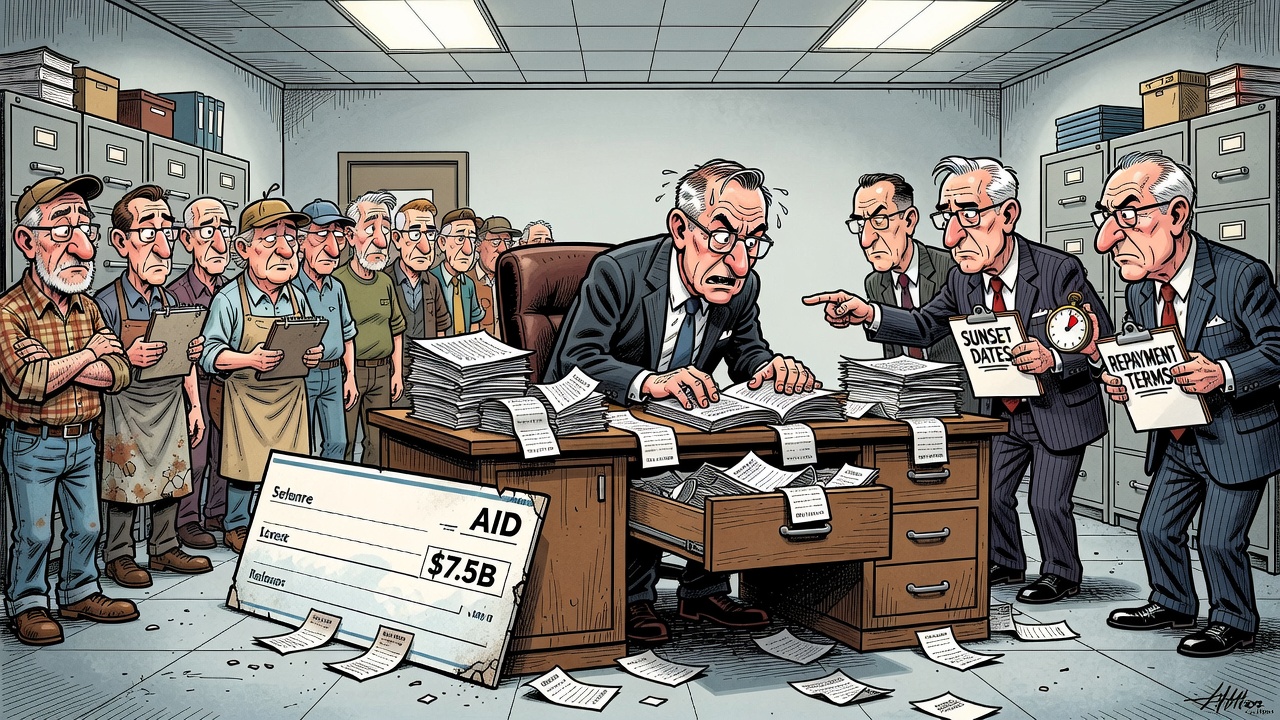
If Ottawa is handing out emergency tariff relief, Canadians deserve recipient names, repayment terms, job metrics, audit dates and sunset clauses in one public ledger.
Ottawa’s tariff fight has entered the spending phase. On August 28, the federal government said Canada suspended trade negotiations with the United States after Washington asked too much and offered too little. It also said the U.S. imposed 50 per cent tariffs on $27.6 billion of Canadian goods effective August 22, and that Canada will answer with counter-tariffs of 15, 25 and 50 per cent on $27.6 billion in U.S. imports effective September 8.
That is the trade-war headline. The accountability story is the rescue package underneath it.
The government announced $7.5 billion in new and enhanced supports on top of nearly $25 billion already provided since the U.S. tariffs began. The package includes another $1.5 billion through regional development agencies, a $500 million BDC liquidity stream, broader access to BDC tariff programs, $2 billion for the Canada Strong Diversification Fund, $3.5 billion in worker and employer supports, and new flexibilities for the Large Enterprise Tariff Loan facility.
Some relief may be justified. Workers did not ask to become bargaining chips. Small exporters should not be crushed because politicians on either side of the border mishandled a trade relationship. But emergency sympathy is not a substitute for controls. A government that can list the tariff rates can also list the safeguards attached to the cheques.
The missing document is a clawback ledger. Every stream should disclose who applied, who qualified, who was denied, how much was approved, whether the aid is a grant, loan or deferral, what repayment terms apply, and what conditions trigger recovery. If a company takes public support and then cuts Canadian jobs, shifts production out of Canada, pays executive bonuses, or cannot document tariff-related losses, taxpayers should know whether Ottawa claws the money back.
The same standard belongs on worker supports. If $3.5 billion is meant to protect paycheques and retrain people into real work, publish the job-retention targets, training providers, completion rates, placement results, EI flexibilities, regional totals and expiry dates. “Rapid response” should mean faster help, not weaker auditing.
Finance officials briefed industry and labour stakeholders this week on the tariff response and said Ottawa will continue assessing impacts. Fine. But the public is a stakeholder too. Counter-tariff revenue, remission decisions and emergency aid should be shown together so Canadians can see whether money is offsetting damage or simply disappearing into general spending.
Conservatives should be clear: defending Canadian workers from unfair tariffs does not require defending Liberal secrecy. Publish the recipient list, eligibility scores, repayment schedule, audit calendar, conflict screens and sunset clauses now. If this $7.5 billion rescue is disciplined, the ledger will prove it. If it is another open-ended subsidy machine, Canadians deserve to find out before the money is gone.
- Employment and Social Development Canada: Canada announces targeted countermeasures and substantive support for workers and businesses in response to U.S. tariffs
- Department of Finance Canada: Department of Finance meets with stakeholders on Canada’s response to U.S. tariffs
- Department of Finance Canada: Complete list of U.S. products subject to counter tariffs
This article argues for disclosure, repayment safeguards and time limits on emergency relief. It does not allege that any relief applicant, public servant or elected official acted unlawfully.