Release the Failed Canada-U.S. Trade Deal Text Before Retaliation Costs Canadians
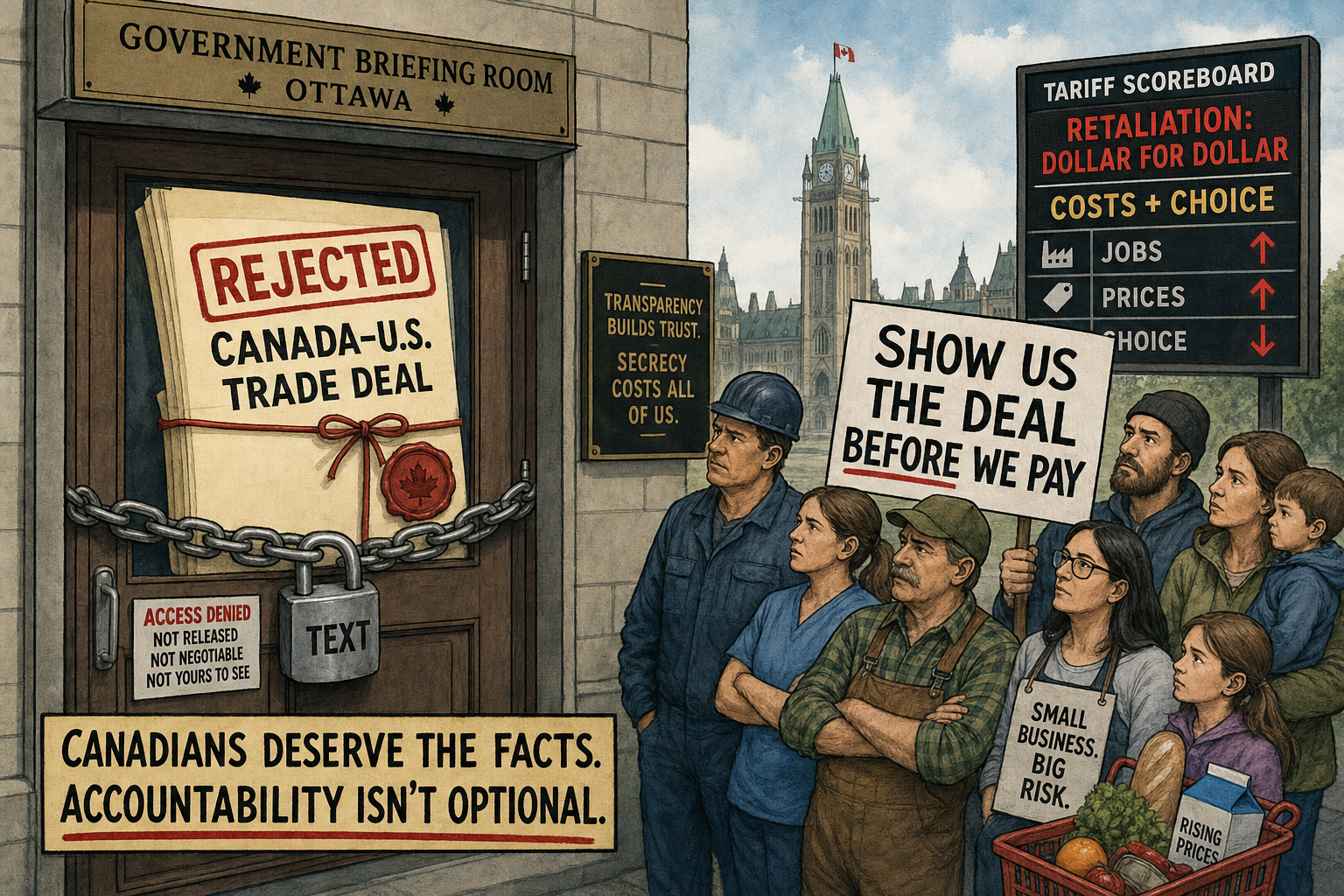
Canada can reject a bad deal and still show Canadians the redacted text, concession ledger and cost math behind the retaliation plan.
Ottawa has now released part of the tariff file. On August 25, Finance Canada published the product list for counter-tariffs taking effect on September 8, covering $27.6 billion in U.S. imports at 15, 25 and 50 per cent rates. It also announced a $7.5 billion package of new and expanded supports for workers and businesses affected by U.S. tariffs.
That disclosure matters. It is also not the missing document.
The missing document is the proposed Canada-U.S. trade deal, or draft text, that both governments reportedly saw before Prime Minister Mark Carney pulled Canadian negotiators home. Global News reported August 23 that Conservative Canada-U.S. relations critic Shuvaloy Majumdar asked Trade Minister Dominic LeBlanc to release the full details of the rejected proposal, arguing that if both Ottawa and Washington saw draft text, Canadians deserve to see it too.
That is not a demand to accept Donald Trump’s terms. It is a demand to audit Ottawa’s story before Canadians pay Ottawa’s response. Carney said on August 22 that the United States “asked too much and offered too little.” He said Canada had been willing to drop remaining retaliatory tariffs on strategic sectors if U.S. tariffs were substantially lowered, encourage provinces to return U.S. alcohol to shelves, and take administrative measures around supply management without changing the system. He also said Canada would not compromise sovereignty, key industries, French language or culture protections.
Those summaries may be accurate. They are still summaries from the government that made the call. A redacted text, concession table and U.S. demand list would let Parliament test the claim without handing negotiators a blank cheque or forcing Canadians to rely on selective briefing lines.
The stakes are no longer theoretical. Finance Canada says the new counter-tariffs will focus on sectors including steel, dairy, appliances, agricultural equipment, pulp and paper, and electronics. The government also says the tariff-remission framework remains available. That means firms will seek relief, bureaucrats will recommend decisions, ministers will pick rules, and taxpayers will fund a fresh round of aid. Secrecy is where favouritism, bad estimates and political spin thrive.
The conservative accountability standard is straightforward: oppose a bad deal, but publish the receipts for rejecting it. Release the redacted draft text. Release Canada’s concession list. Release the U.S. demand list. Release the sector-impact table, tariff cost estimate, remission criteria, support-program eligibility rules and parliamentary timetable. If cabinet’s decision was as strong as advertised, the documents will strengthen public confidence. If not, Canadians should know before September 8.
Trade retaliation may be necessary. Blind trust is not. In a tariff war, the bill lands on workers, consumers and businesses. They deserve more than slogans; they deserve the file.
- Global News: Conservatives urge feds to release details of U.S. deal Canada walked away from
- Prime Minister of Canada: Prime Minister Carney delivers remarks on Canada-U.S. trade negotiations
- Department of Finance Canada: List of products subject to counter-tariffs effective September 8, 2026
- Department of Finance Canada: Canada announces targeted countermeasures and support for workers and businesses
- Juno News: What did Carney offer Trump? Poilievre demands failed trade deal be made public
This article argues for disclosure of deal text and implementation records; it does not claim that rejecting the U.S. proposal was wrong or that any relief applicant has acted improperly.