Release the Legal-Cost Ledger for Ottawa’s First Nations Court Fights
Ottawa is appealing First Nations water and housing rulings while refusing to disclose the aggregate taxpayer legal bill. If the court fight is justified, publish the receipt.
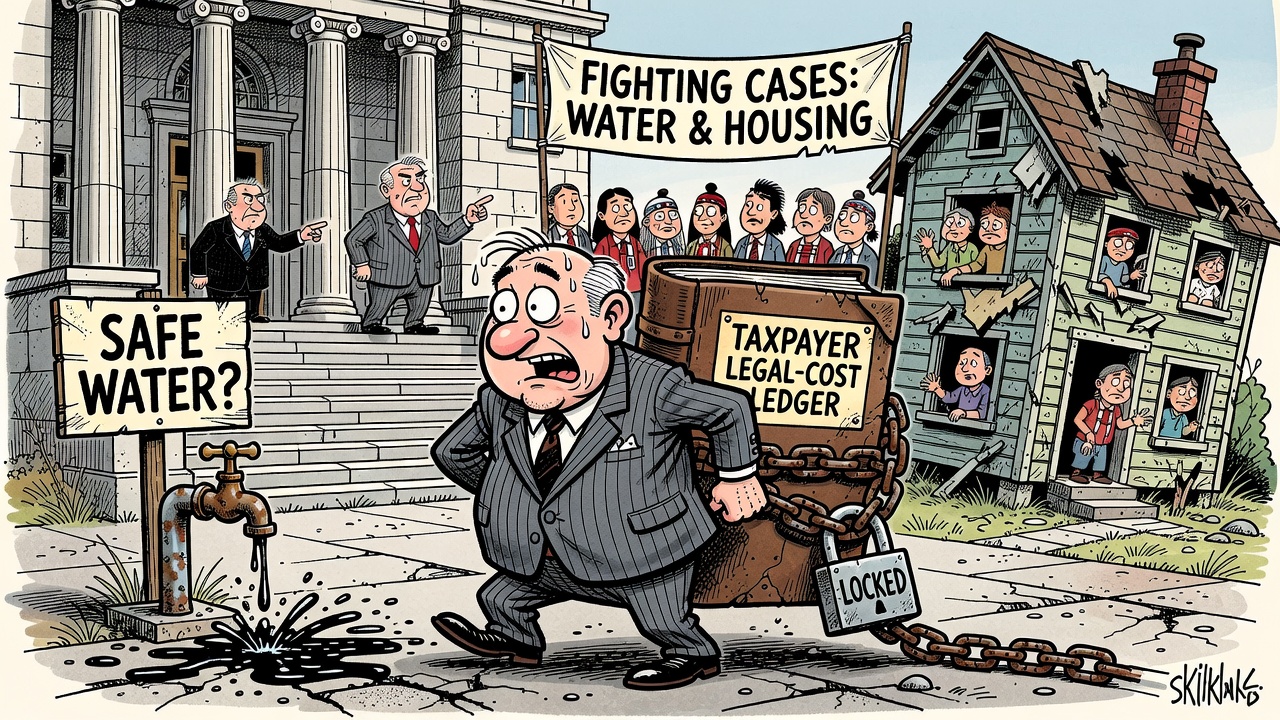
The Carney government’s First Nations accountability problem is no longer just about policy. It is about the bill Ottawa will not show Canadians.
CBC Indigenous reported Monday that the federal government refused to disclose how much Canada has spent fighting First Nations in court over safe drinking water and housing rights on reserve. The Department of Justice cited solicitor-client privilege for the aggregate amount spent by the Trudeau and Carney Liberal governments in litigation involving St. Theresa Point First Nation and Shamattawa First Nation from 2022 to the present.
That answer may be legally convenient, but it is politically indefensible. These are not private invoices from a family law dispute. They are taxpayer-funded costs attached to major public-interest litigation about essential services in remote First Nations communities. Canadians do not need privileged legal strategy. They do need the total bill.
The context matters. CBC reported that St. Theresa Point and Shamattawa won separate Federal Court orders in December confirming Canada’s duties to ensure access to safe drinking water and housing, as early steps in national class-action lawsuits. Ottawa is appealing both orders and continues to deny the duties. That is the government’s right in court, but every right comes with accountability when public money is paying the lawyers.
Justice also has to explain why secrecy is the default when the government’s own access-to-information watchdog has previously taken a different view of legal-fee totals. In a 2021 decision involving the Department of Justice, the Office of the Information Commissioner found that legal-fee information in that file was neutral information not subject to privilege. Its broader disclosure guidance has also warned against turning solicitor-client exemptions into an excuse for hiding aggregate legal-cost data.
There is a fair caveat: section 23 of the Access to Information Act allows institutions to refuse records subject to solicitor-client privilege, professional secrecy or litigation privilege. No serious accountability argument should pretend that privilege does not exist. The question is whether Ottawa is stretching a real legal protection into a political shield against the simplest public number: how much has this fight cost?
A conservative accountability standard is straightforward. If ministers believe appeals are necessary to protect the public interest, they should defend that position openly. Publish the aggregate legal cost to date, the number of federal lawyers assigned, any outside-counsel spending, projected appeal costs, settlement authority, and a plain-language comparison showing what equivalent dollars could buy in water systems, repairs or housing.
Taxpayers should not have to choose between respecting legal privilege and seeing the government’s receipt. Ottawa can protect legal advice while disclosing aggregate spending. If the Liberals are confident this court fight is wise, necessary and fiscally responsible, they should release the ledger before asking Canadians to fund another round.
- CBC Indigenous via Yahoo News: Canada won't disclose cost of fighting First Nations in court on water, housing
- The 1 News mirror: CBC story mirror on First Nations court-cost secrecy
- Office of the Information Commissioner of Canada: Department of Justice Canada (Re), 2021 OIC 9
- Office of the Information Commissioner of Canada: 2015 Chapter 4: Maximizing disclosure
- Justice Laws Website: Access to Information Act, section 23
This article does not claim privileged legal advice should be published. It argues that aggregate taxpayer legal-cost totals can and should be disclosed without exposing litigation strategy.