Tentative Trade Deal Needs a Public Concession Ledger
Before Ottawa takes a Canada-U.S. trade victory lap, publish the concessions, carve-outs, sector impacts and provincial commitments.
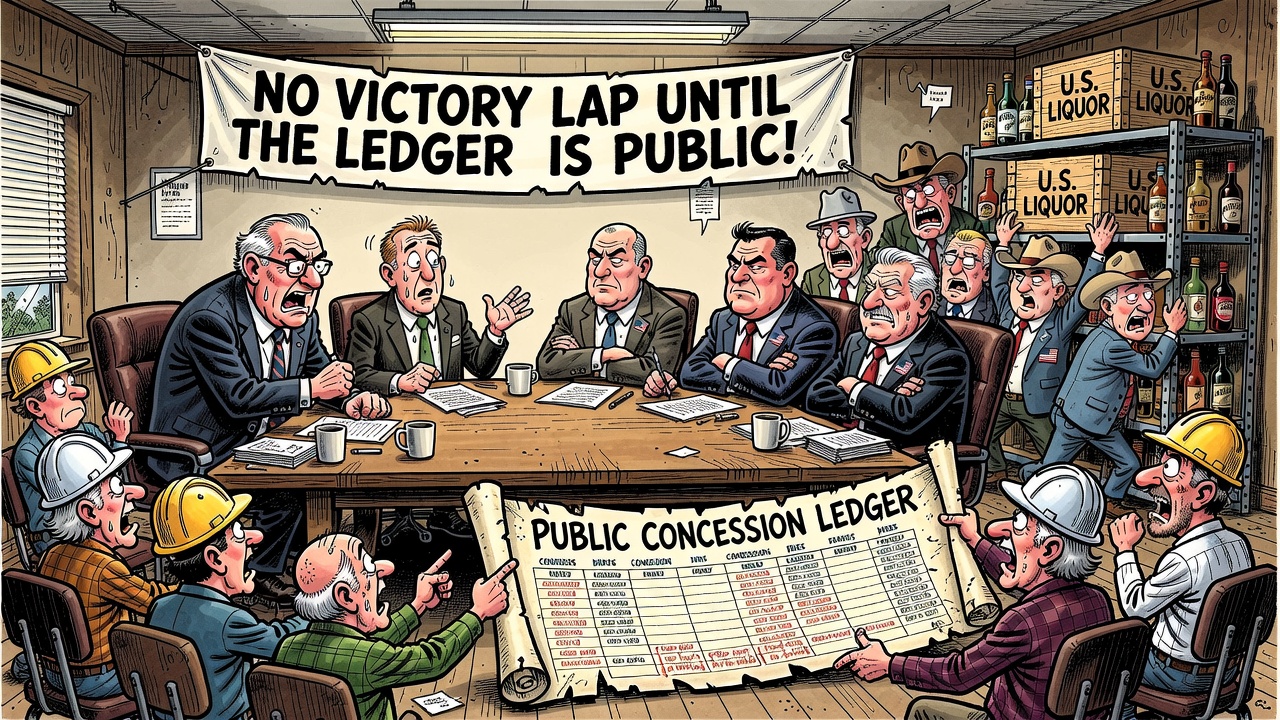
Canadians do not need another closed-door trade victory lap. They need the deal sheet.
On August 20, The Canadian Press reported that Intergovernmental Affairs Minister Dominic LeBlanc was back in Washington after Ottawa asked premiers to lift retaliatory restrictions on American alcohol. The same report said Prime Minister Mark Carney framed the move as a way to remove a barrier before a possible Canada-U.S. trade arrangement, while LeBlanc told reporters there was no final agreement yet.
That sequence is exactly why Parliament and the provinces need a public concession ledger. If provincial shelves are supposed to reopen to U.S. products before Canadians see the trade text, the burden is on Ottawa to explain what Canada is receiving, what Canada is giving up, and who authorized the pre-finalization move.
The tariff backdrop is not hypothetical. A White House executive order signed July 31 raised the general tariff rate on Canadian goods that do not qualify under CUSMA rules from 25 percent to 35 percent, effective August 1. The Associated Press reported on August 19 that about 85 percent of Canada-U.S. trade was still shielded by CUSMA, but key sectors remained under pressure from separate U.S. measures, including steel, aluminum and autos. That is not a small footnote. It is the whole negotiating map.
Ottawa’s defenders will say trade talks require confidentiality. Sometimes they do. But confidentiality is not the same as secrecy after concessions begin moving. A responsible government can protect live negotiating positions while still publishing categories of concessions, affected sectors, decision dates, risk assessments and provincial commitments. If the alcohol reversal is harmless housekeeping, release the memo that says so. If it is leverage, explain why that leverage was spent before the final document was public.
The same standard should apply to every sector Ottawa claims to be defending. What happens to lumber? What happens to autos? What tariff treatment applies to steel and aluminum? Are dairy, critical minerals, procurement, digital rules or border measures anywhere in the side-letter universe? Which carve-outs are temporary, which are permanent, and which depend on U.S. discretion?
This is not an argument against a deal. Canada needs stable access to its largest trading partner. Workers, farmers, manufacturers, ports and border communities all need certainty. But certainty does not come from a press conference. It comes from enforceable text, public timelines, sector-by-sector impact tables and a record of who accepted which tradeoffs.
Carney ran as the competent manager for a hostile U.S. trade environment. Fine. Competence should make disclosure easier, not harder. Before ministers call this a win, publish the redacted deal tracker: Canadian concessions, U.S. concessions, sectors still exposed, provinces consulted, provincial actions requested, side letters, review dates, retaliation options preserved, and the name of the minister accountable for each decision.
A tentative deal may be good news. A hidden concession ledger is not.
- The Canadian Press via CTV News: Canada's top trade minister LeBlanc in Washington as trade deal with U.S. may be imminent
- The Canadian Press via Global News: Canada-U.S. trade deal ‘may be imminent,’ LeBlanc in Washington
- Associated Press: US trade adviser says exemptions for Canada and Mexico may be extended
- Federal Register: Executive order raising duties on non-CUSMA Canadian goods
- Global Affairs Canada: Readout: Minister LeBlanc meets with U.S. Secretary of Commerce
This article argues for disclosure of trade-deal categories and decision records. It does not claim a final Canada-U.S. agreement has been signed, that any specific concession has been confirmed, or that all negotiating documents can be released without redactions.