Don’t Narrow the Access-to-Information Receipt Window
If Ottawa changes the access system, Canadians need to see exactly which records become easier — or harder — to obtain.
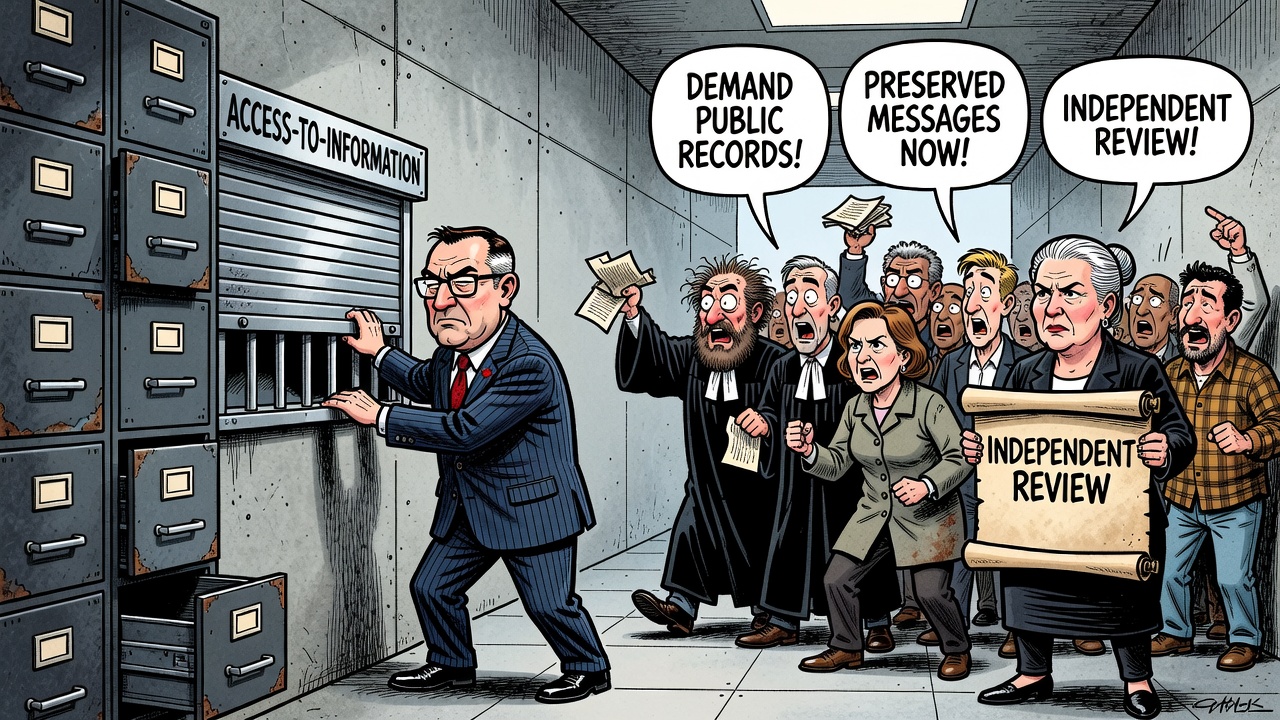
Access-to-information law is not a courtesy Ottawa grants when it feels generous. It is one of the few tools ordinary Canadians, journalists, watchdogs and opposition MPs can use to test what government said internally against what ministers said publicly.
That is why any move to rewrite the system deserves a simple conservative test: does it make government easier to audit, or easier to hide? The federal Access to Information Act says government information should be available to the public, that necessary exceptions should be limited and specific, and that disclosure decisions should be reviewed independently. Treasury Board’s own public explainer says the Act gives citizens, permanent residents, and qualifying people and corporations a right to request records under federal institutional control.
Those principles matter more now because modern government does not live only in tidy briefing binders. It lives in chats, texts, draft emails, disappearing-message habits, ministerial offices, consultants’ files and outsourced platforms. If a reform narrows what counts as a record, weakens preservation duties, expands rejection powers, or makes whole categories harder to request, taxpayers lose the receipt trail before they even know what to ask for.
The Information Commissioner has already warned for years that Canada’s access system suffers from chronic delay and underperformance. Her office has called for modernization that strengthens, not sidelines, the public’s right of access. That should be the floor for any Carney-government proposal: no reform should make secrecy cheaper than compliance.
Ottawa can avoid the suspicion by publishing a plain-language change table before it asks Parliament to bless anything. For every proposed change, list the current rule, the new rule, who benefits administratively, what records become easier to obtain, what records become harder to obtain, and whether the Information Commissioner supports it. If the answer is “no change to public rights,” prove it line by line.
There also needs to be an ephemeral-records rule with teeth. If ministers, aides or officials conduct government business on tools that auto-delete, the duty should be to preserve the government record, not to shrug after the deletion timer runs out. Public business belongs in a retrievable public archive, subject to legitimate redactions for privacy, cabinet confidence, law enforcement and national security — not in a black hole of convenience.
Conservatives should be relentless here because transparency is not a left-right favour. It is how taxpayers police spending, conflicts, procurement, immigration backlogs, national-security failures and ethics advice. If Ottawa wants fewer ATIP fights, the answer is proactive disclosure, faster processing, better recordkeeping and real penalties for avoidance. The answer is not a smaller receipt window.
- Justice Laws Website: Access to Information Act
- Treasury Board of Canada Secretariat: Access to Information Act explainer
- Office of the Information Commissioner of Canada: 2025 Review of the Access to Information Act submission
- Office of the Information Commissioner of Canada: 2022–23 Annual Report
This article argues for stronger public access and record preservation. It does not oppose legitimate, limited redactions for privacy, cabinet confidence, law enforcement or national security.