Carney’s Streaming-Tax Retreat Becomes a $600M CanCon Lobbying Fight
If Ottawa is turning a streamer levy into public funding, taxpayers deserve the replacement ledger before the cheques go out.
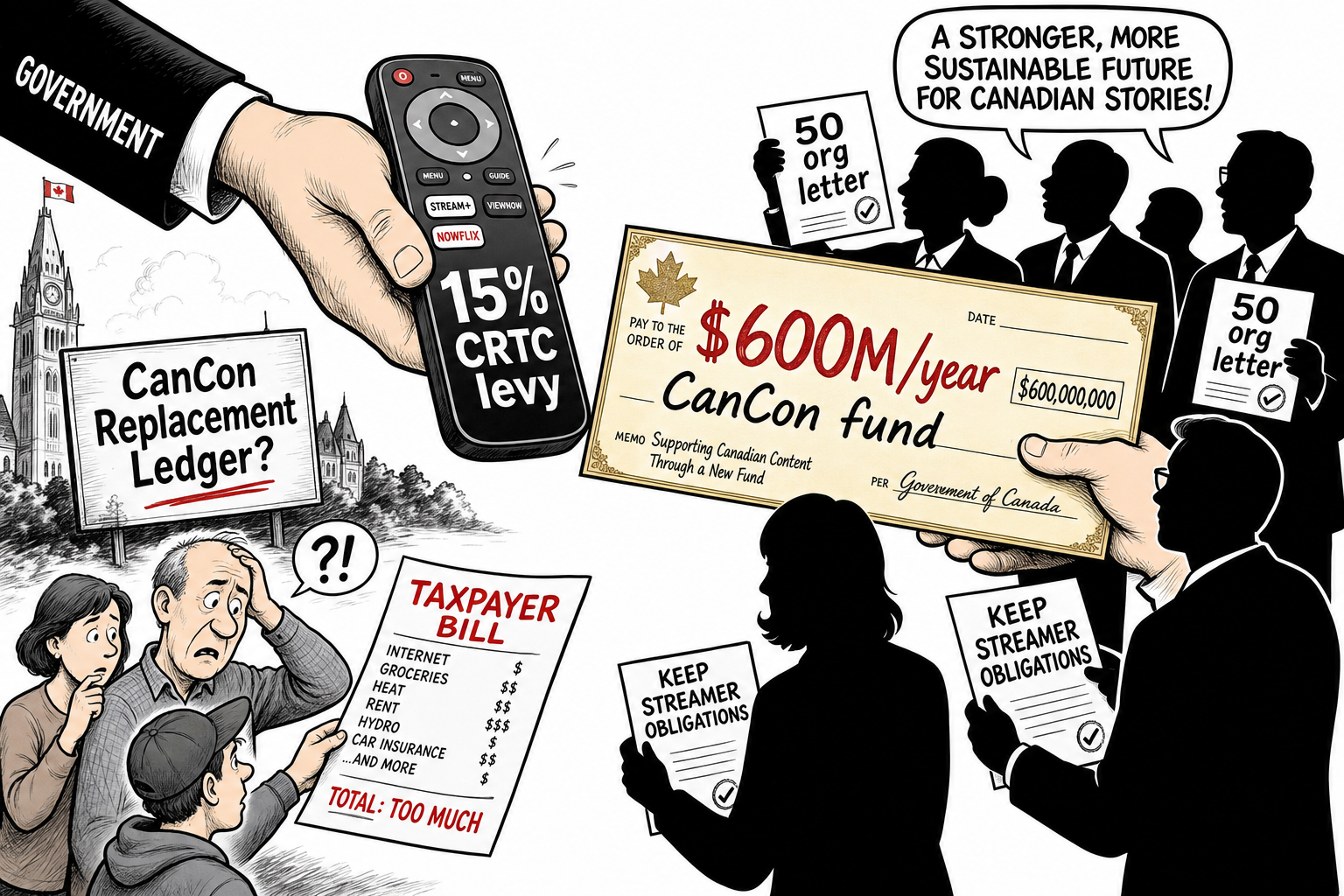
Prime Minister Mark Carney’s government tried to retreat from the “Netflix tax.” Now the retreat has become its own accountability problem.
CBC/Canadian Press reported on August 13 that dozens of cultural-sector organizations are urging Carney not to scrap rules requiring large foreign streamers such as Netflix to make financial contributions toward Canadian content. The letter was signed by 50 organizations, including producers, unions and film festivals.
The key number is not small. Ottawa promised to replace the 15 per cent charge on large streamers’ Canadian revenue with public funding. CBC reports that pledge is $600 million per year. In other words, a policy sold as ending a controversial streamer charge now appears to move the bill onto taxpayers unless the government proves otherwise.
The cultural groups’ argument is also revealing. They say annual budget funding is not a substitute for a CRTC-regulated contribution regime because budget money can be changed by future budgets and political pressure. They want durable, legally enforceable obligations. That is their position; they are entitled to argue it. But taxpayers are equally entitled to ask whether Canada is being set up for both sides of the bill: public funding on one track and renewed mandatory streamer contributions on another.
The July paper trail matters. CBC reported on July 29 that the Attorney General’s office told the Federal Court of Appeal, in a July 17 document, that the government intended to “eliminate” the base contribution requirement on streaming services and provide government funding to replace those contributions. That filing came after the CRTC had raised required contributions for large streaming services from five per cent to 15 per cent of Canadian revenue.
Carney framed the rollback around affordability, saying Canadians often have one or two streaming services and “this stuff adds up.” Fine. Then publish the math. How much would the levy have collected? Which programs will receive the $600 million? What is the annual cost by department and fund? Are streamers fully released from base contributions, or will another obligation survive through a new policy direction?
The trade angle makes the receipt test more urgent. CBC reported that Ottawa changed course after the United States identified the Online Streaming Act as a trade irritant, while the U.S. trade representative said Canada would not “really get credit” for undoing it. If this was a concession, Canadians should know what, if anything, Canada received in return.
This is the Liberal policy pattern: regulate first, trigger a backlash, retreat under pressure, then announce a taxpayer backstop and call it stability.
A conservative accountability answer is simple. Publish the CanCon replacement ledger: recipients, amounts, statutory authority, streamer obligations, trade concessions, CRTC directives, sunset dates, performance measures and taxpayer exposure. If the old levy was bad for affordability, replacing it with a permanent $600-million annual charge on the public purse is not reform. It is cost-shifting with better branding.
- CBC/Canadian Press: Cultural sector urges Carney to keep tax on large streamers to fund Canadian content
- CBC/Canadian Press: Ottawa plans to end 'Netflix tax,' replace with public Canadian content funding: document
This article criticizes government policy design, spending transparency and regulatory accountability.