If U.S. Booze Returns, Publish the Lumber-Relief Ledger
Canadians can live with tough bargaining. What they should not accept is visible Canadian movement with no public accounting of what workers get in return.
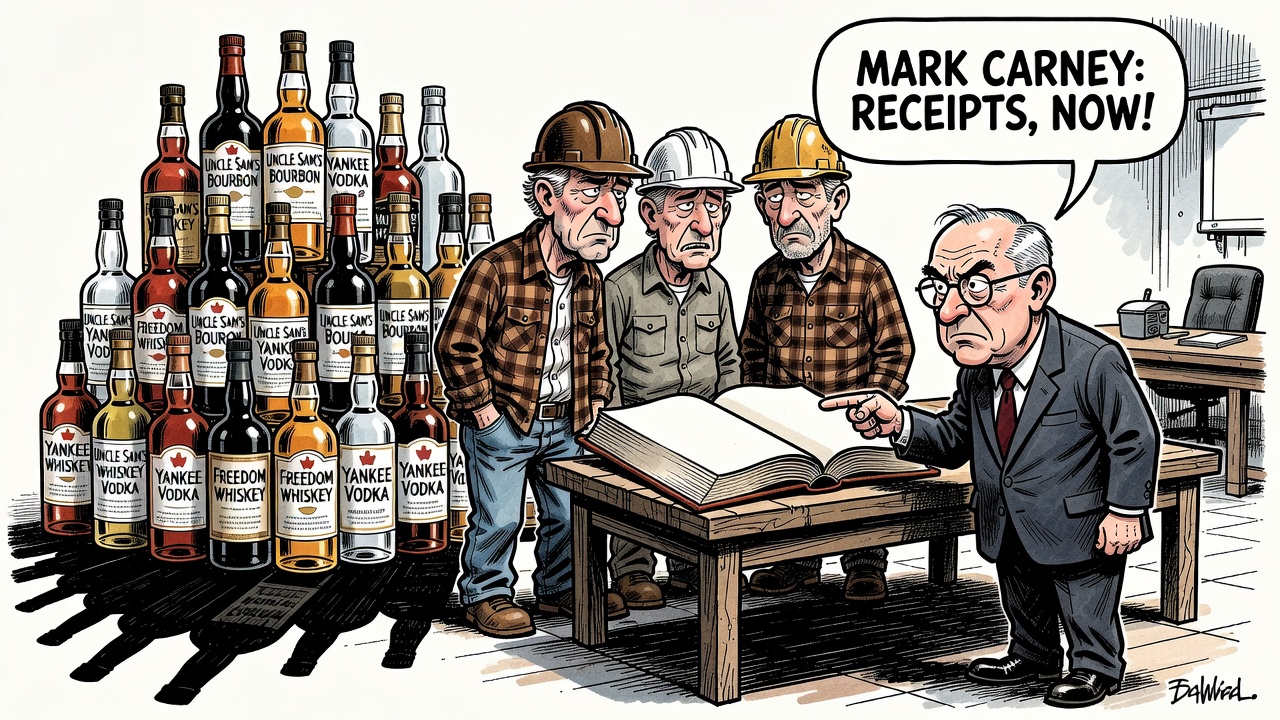
The latest Canada-U.S. trade reporting has an uncomfortable split screen. CBC News, as surfaced in the evening research file, reported that Ottawa has told provinces to prepare to put American alcohol back on shelves. CTV News, citing sources, reported that the United States is uninterested in lumber relief and wants American booze back “immediately” if a deal is reached. Those are not the same thing as a finalized agreement. But they are enough to demand a ledger before the victory lap.
Provincial liquor shelves are not just a symbolic irritant. They became a highly visible retaliation tool in the tariff fight, because voters understand it instantly: Canadian governments can choose whether U.S. products receive shelf space in monopoly or regulated retail systems. If Ottawa is now coordinating with provinces to reverse that signal, the federal government should explain what Canada receives at the same time, in writing.
The lumber side makes the accountability test sharper. Softwood lumber is not an abstract negotiating category. It means mills, contractors, forestry towns, truckers, port workers, First Nations operators and families watching another cross-border dispute grind through their paycheques. If Washington is still refusing meaningful lumber relief while Ottawa prepares a concession Americans can see on store shelves, then Prime Minister Mark Carney and Trade Minister Dominic LeBlanc owe Canadians more than optimistic adjectives.
A conservative accountability standard is simple: no secret concession math. Publish the categories of movement under discussion, the provinces consulted, the sectors expected to benefit, the sectors still exposed, and the timeline for any tariff relief. If the alcohol step is merely administrative preparation, say so. If it is being offered as part of a broader package, explain the package. If lumber has been separated from the deal, admit that too.
This is exactly why closed-door “trust us” trade politics fails. Ottawa can always announce a deal in broad language, call it pragmatic, and insist the hard choices were unavoidable. But Canadians are entitled to know whether the federal government traded away a visible pressure point while leaving a major Canadian industry outside the protection line.
There may be a defensible reason to move on alcohol. There may be a sequencing argument, a legal risk, or a larger tariff exchange that makes sense. But the burden is on Ottawa to show the receipts. The Carney government should publish a booze-and-lumber concession ledger before provincial shelves are reset and before Canadians are asked to celebrate another “breakthrough” whose costs are discovered only after the press conference.
- CBC News via r/canada: “Feds tell provinces to get ready to put American booze back on the shelves, sources say”
- CBC News via r/canada: “U.S. uninterested in lumber relief for Canada”
- CTV News: U.S. uninterested in lumber relief, wants American booze back on shelves “immediately” if deal reached: sources
- Global Affairs Canada: Minister LeBlanc and Canada’s Chief Negotiator update provincial and territorial Trade Ministers — August 6, 2026
This article relies on published reporting and an official federal readout. It does not claim a final Canada-U.S. agreement has been reached; it argues that any reported movement on alcohol shelves should be matched with transparent disclosure of lumber outcomes and broader tariff concessions.